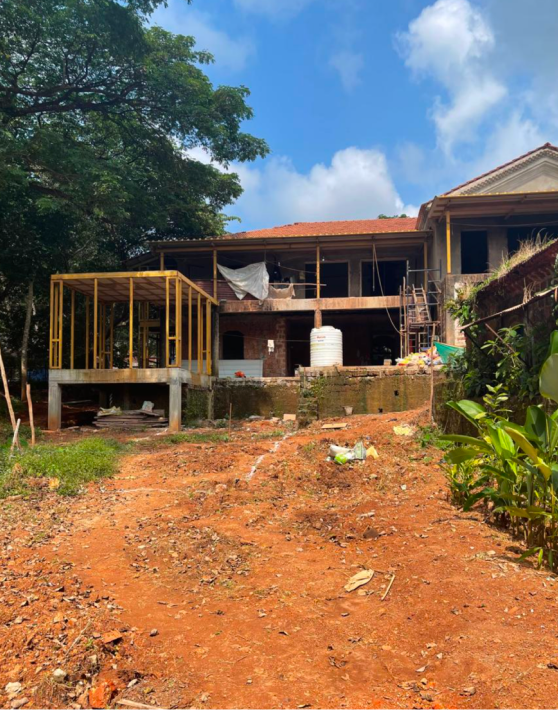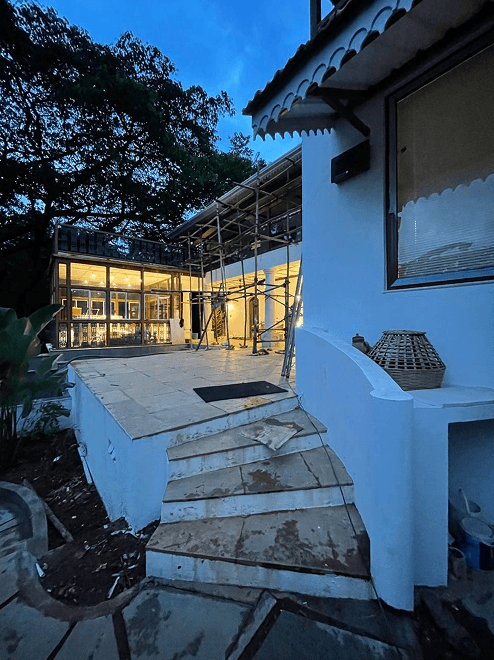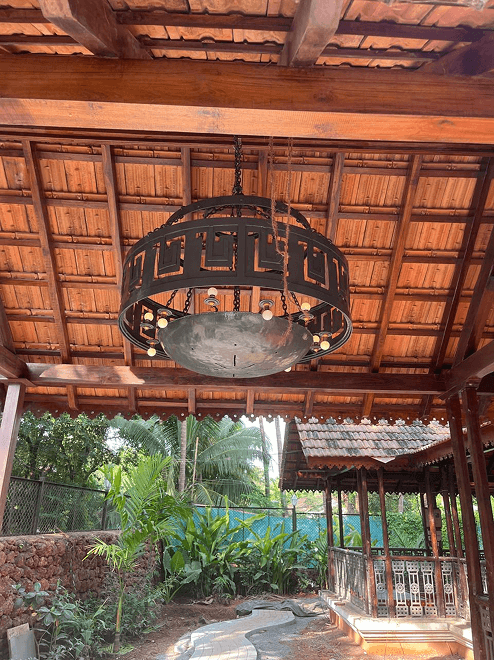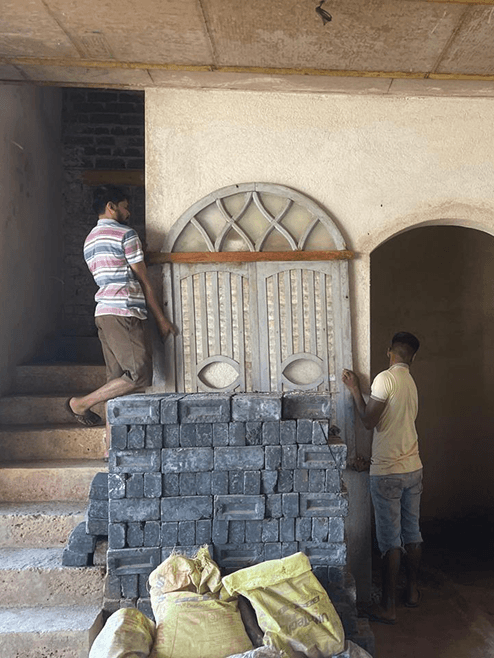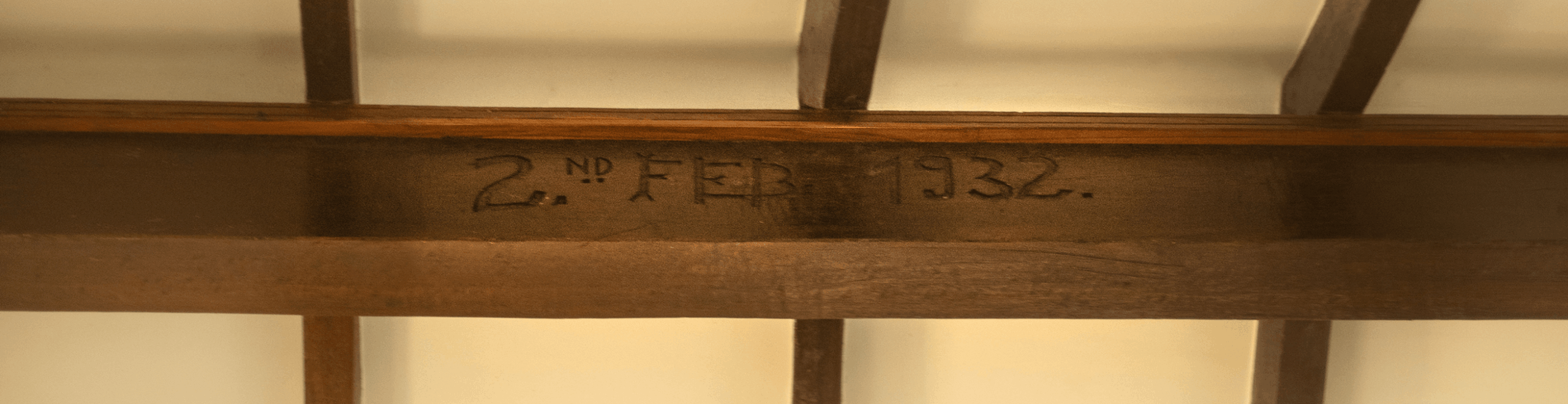


The existing structure was lifted and rebuilt rather than demolished. Old roof timbers were assessed, retained where sound, and replaced in kind where not - honouring the past while making it habitable for the future.
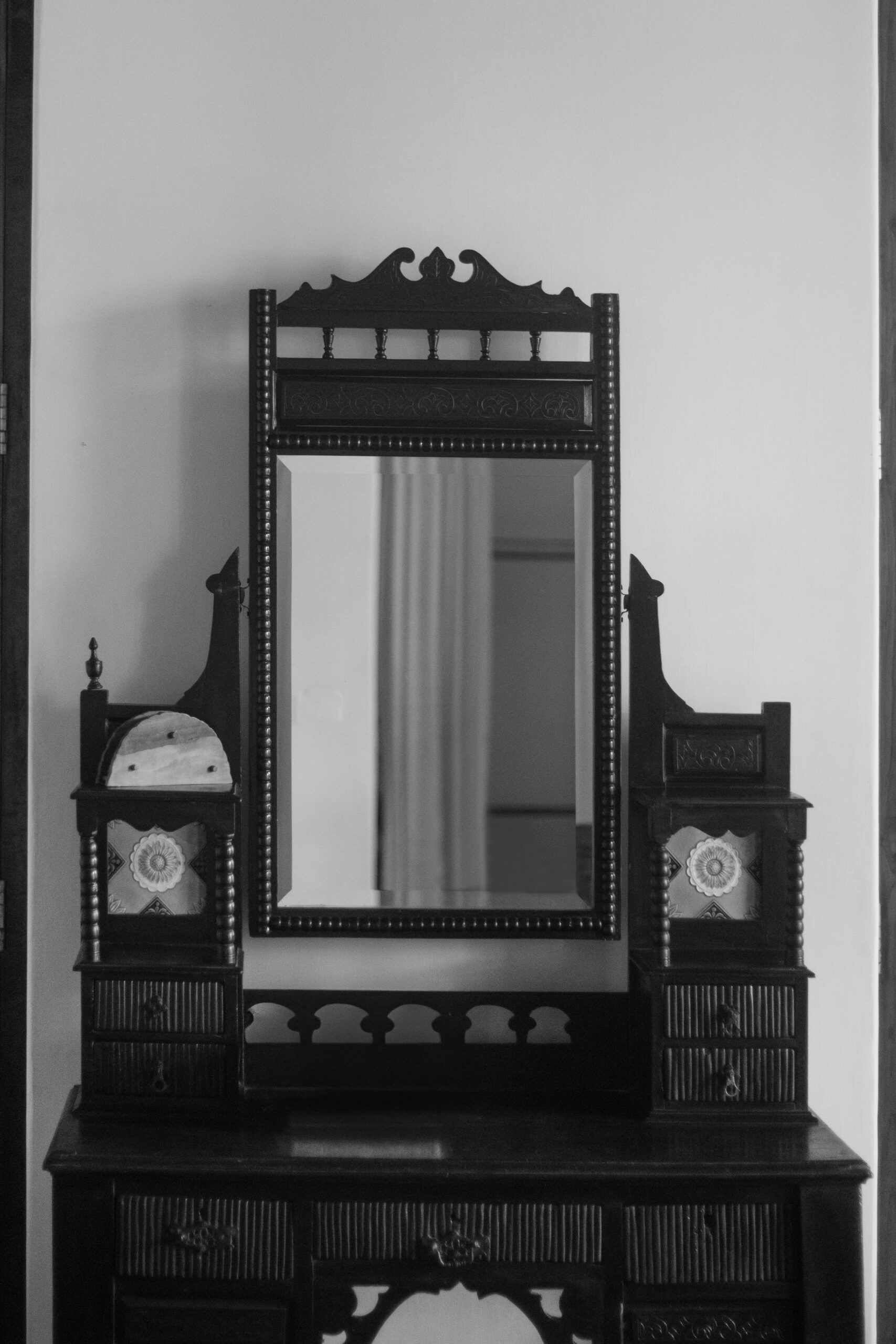
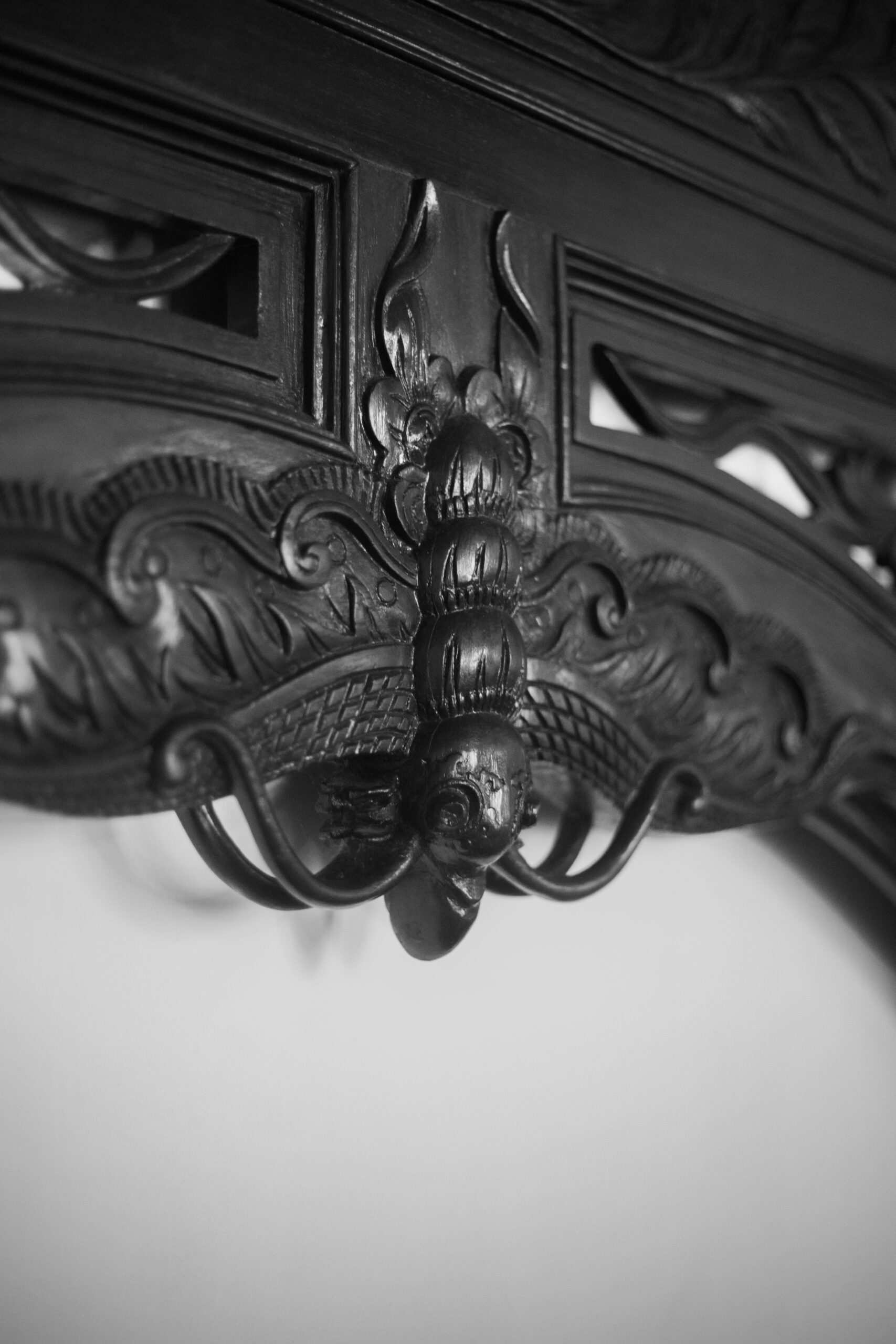
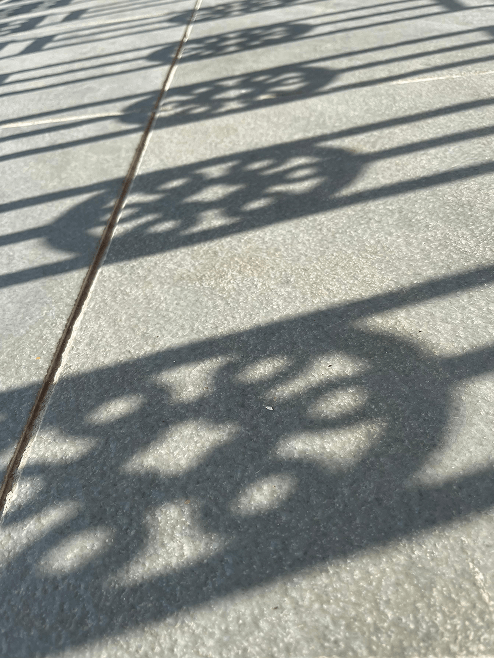
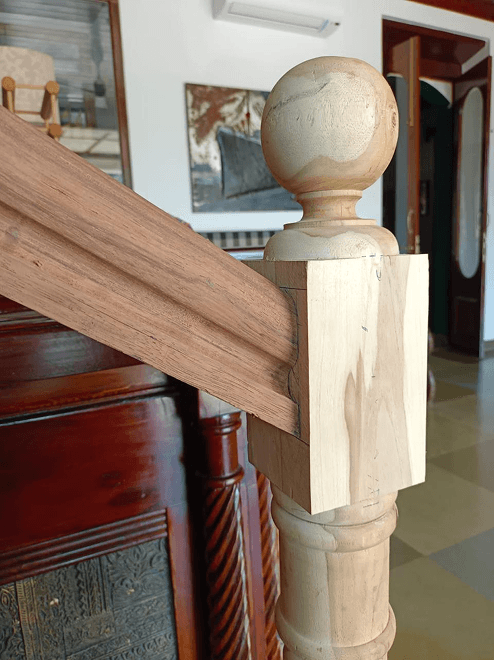
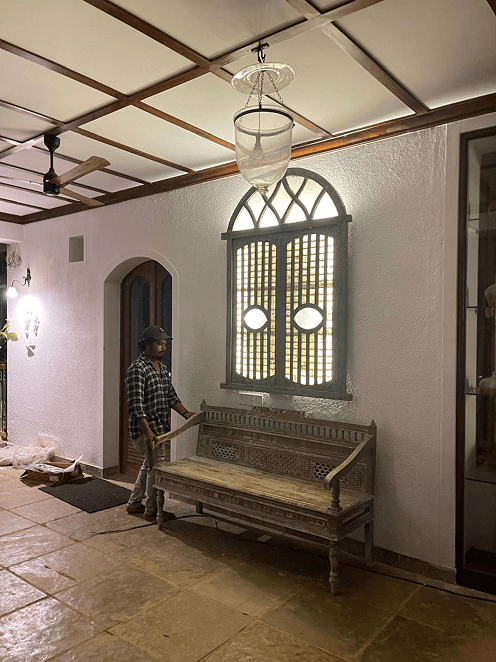
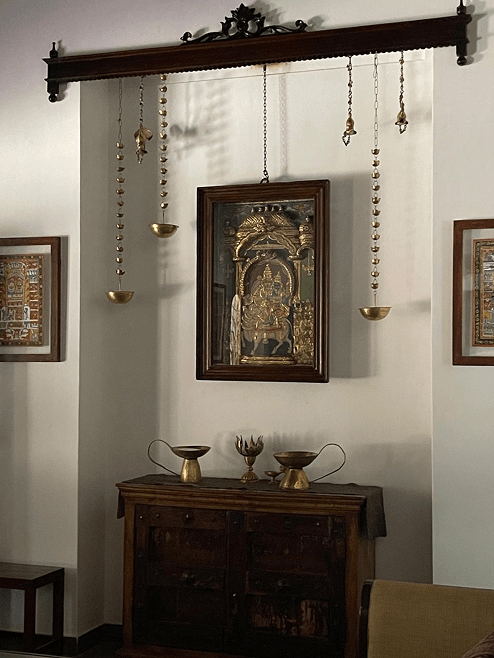
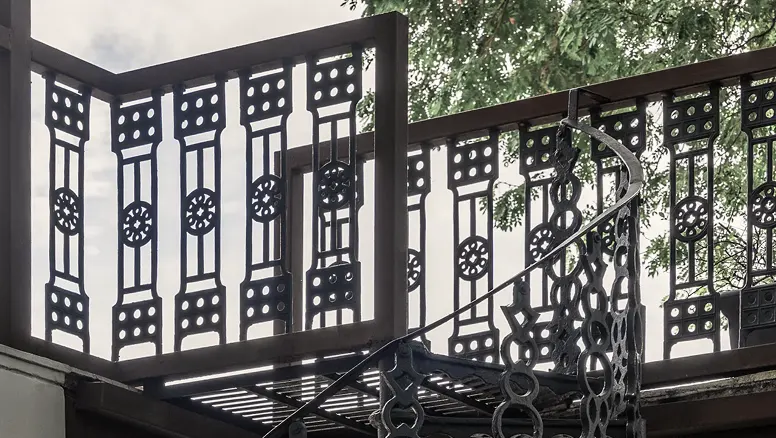
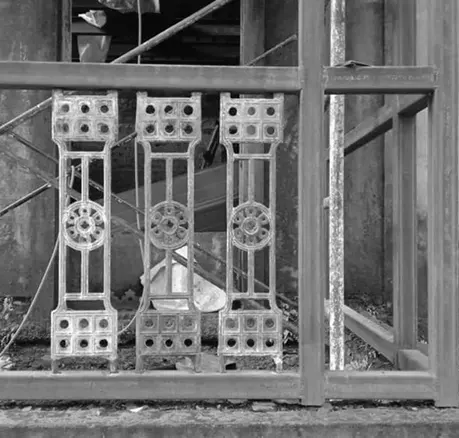
Reclaimed timber, antique brass fittings, salvaged cast iron balustrades, and hand made Mangalore terracotta tiles - every material carries a provenance. Sustainability here is old-world wisdom, not a marketing claim.
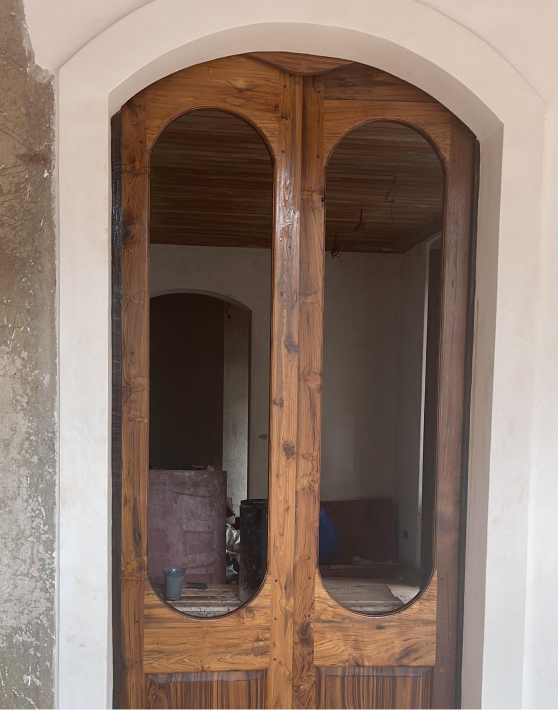
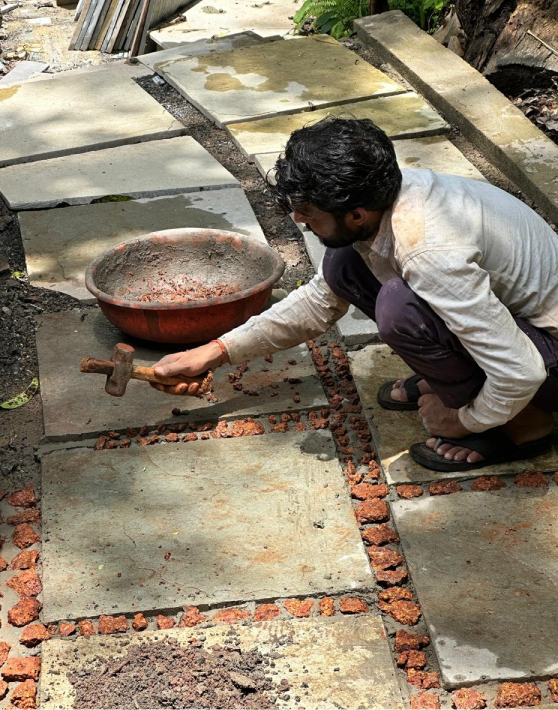
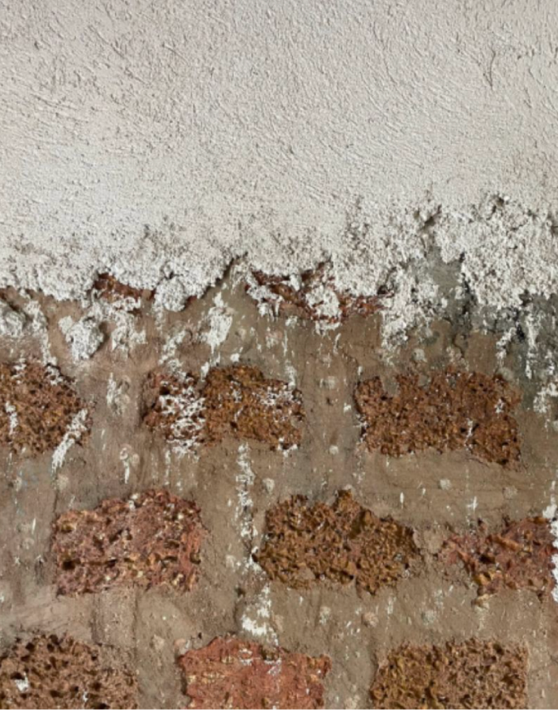
Local masons and carpenters from Jeernodhar Conservators treated the sal wood, prepared the lime plaster, and laid the oxide and Kota stone floors using techniques passed down across generations - a quiet revival of fading arts.
Porous laterite stone walls, deep verandah overhangs, and thick lime plaster regulate temperature naturally. The house was designed to dance with the elements, not fight them.
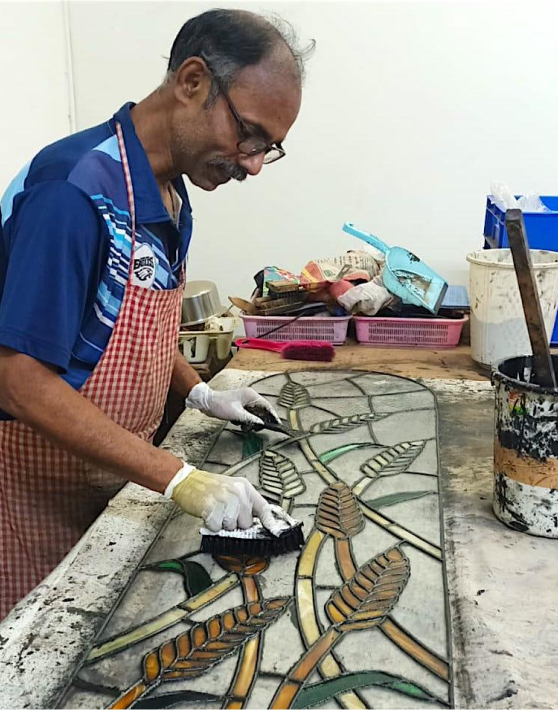
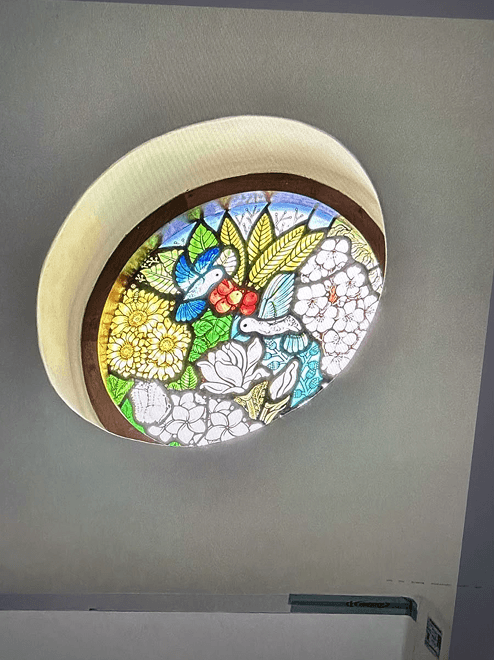
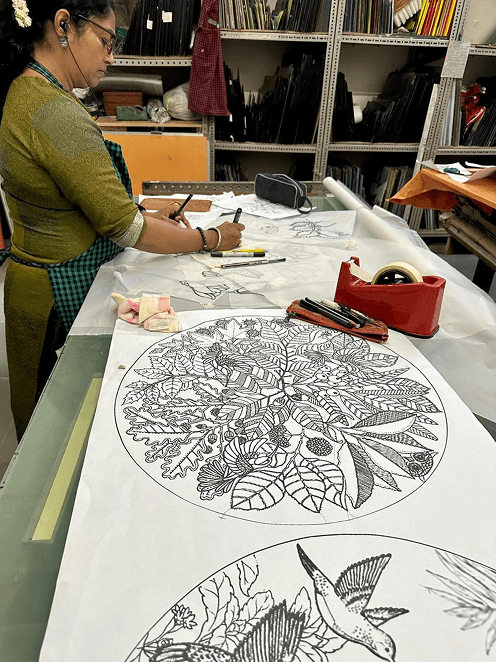
Stained glass panels - designed by The Glass Studio, Mumbai, and inspired by the changing colours of Pilerne's paddy fields - sculpt light through every hour of the day. A permaculture garden grows okra, amaranth, and lemongrass; chefs draw from it daily.
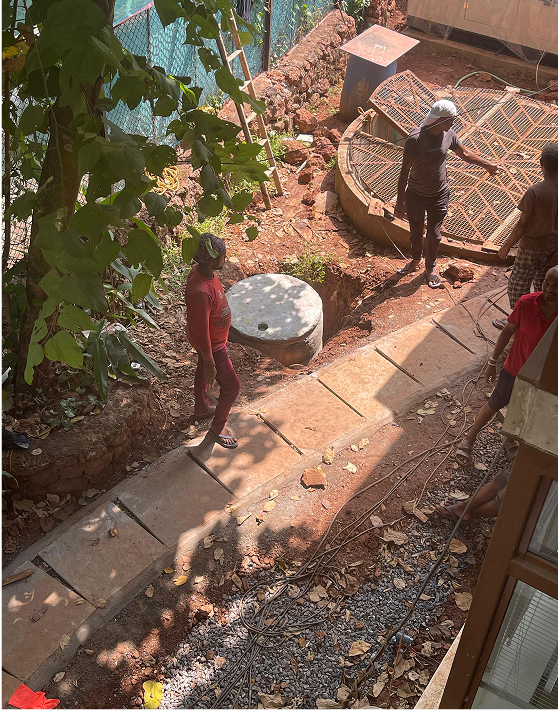
Rainwater from the Mangalore tiled roof is directed via swales into a central lotus pond, slowly recharging the groundwater table. Composting closes the organic loop. The estate lives lightly on its land.